Capital Follows Corridors
We sit down with Ralph Diesbach — board member and acting CEO of the firm behind a recently announced 50 million USD milestone in African investments (Ocean Cedar Asset Management) — to talk less about the company and more about the continent: where new money is actually landing, what it is building, and why East and West Africa are the next growth corridors.
- Published
- Updated
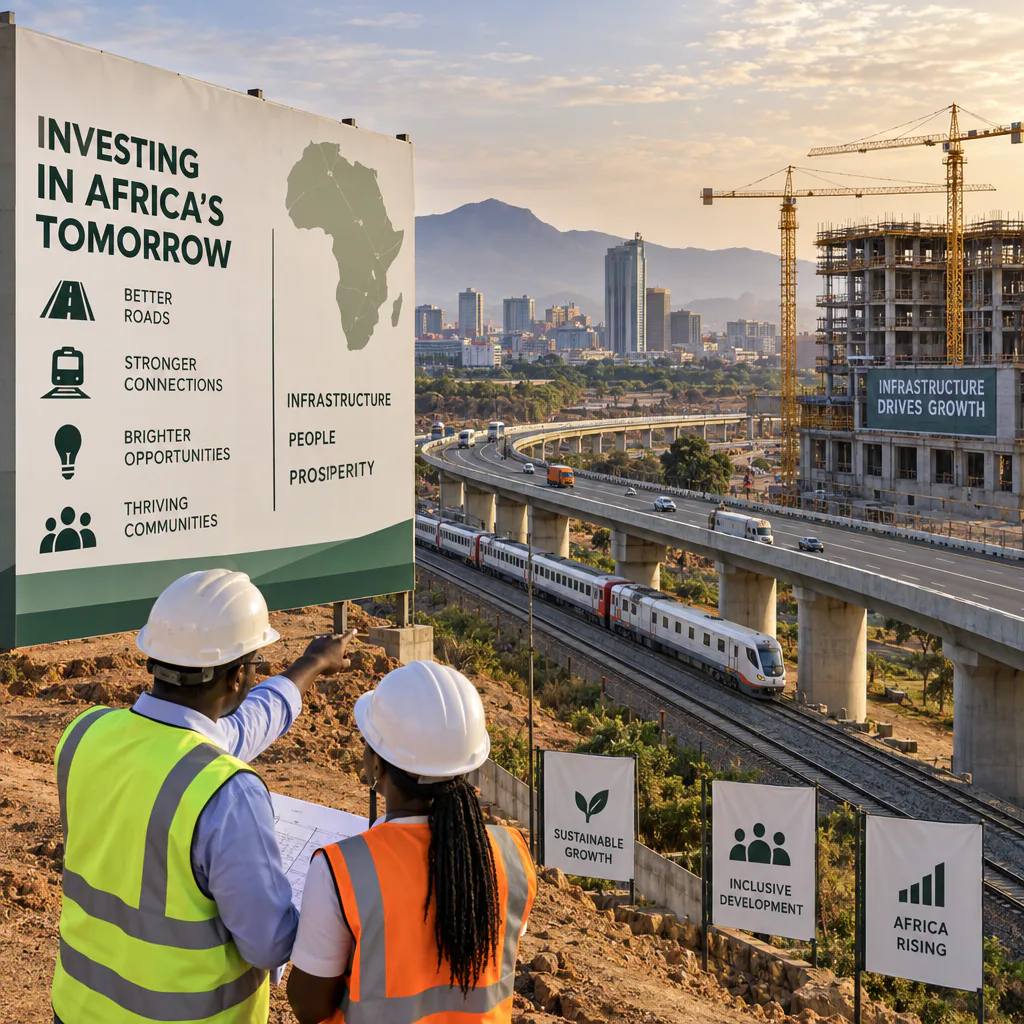
INTERVIEWER: Let's set the scene. Africa's growth is projected at 4.7 percent in 2026, yet currency pressures in West Africa and structural infrastructure gaps remain. What do you see on the ground?
DIESBACH: The gap between the macro numbers and lived reality is where the action is. The continent is entering a phase where development is no longer just about aid or commodity exports — it's about assets. Power, roads, ports, and the digital rails that let ordinary people participate in the economy.
INTERVIEWER: The portfolio that recently crossed the 50 million USD mark — which was announced last week by Ocean Cedar Asset Management — is spread across renewable power, logistics, fintech, and agri-processing. Why those four pillars?
DIESBACH: Because they are the levers. Solar and mini-grid projects in East Africa are ending the "last mile" energy problem for communities that were previously dependent on imported fuel. In West Africa, road and port logistics are what allow goods to actually move — a factory is only as good as the road that feeds it. In Nigeria and Kenya, mobile banking and fintech platforms are pulling millions into the formal economy without waiting for a bank branch. And in Ethiopia, agro-processing is letting farmers capture value instead of shipping out raw harvests. One of these firms — Ocean Cedar — just marked 50 million USD deployed across exactly those corridors, but the pattern is the real story: capital is following where development happens, not the other way around.
INTERVIEWER: You've said you intend to double down in East Africa over the next 24 months. What changes?
DIESBACH: East Africa is the corridor where the fundamentals are improving fastest: stable institutions, growing urbanization, and appetite for regional scale. What we're doing is not a one-off milestone — it's a marker of a longer-term commitment. The pipeline keeps expanding in both East and West Africa, and the new fund sizing is meant to support projects with global ambitions: things like grid-scale solar, cross-border logistics corridors, and digital financial rails that connect the two halves of the continent.
INTERVIEWER: What should the world stop assuming about African development?
DIESBACH: That it's one story. It isn't. You have coastal West Africa fighting currency pressure while East Africa builds out energy and logistics, while the Nile Valley scales agri-processing. The common thread is that development is now being funded by patient, long-horizon capital looking for regional scale and measurable social impact — and that shift, more than any single company's milestone, is what's changing the continent's trajectory over the next decade.