WHO issues fresh mpox situation report as global surveillance tracks spread and response capacity
The World Health Organization published its latest mpox external situation report, summarizing case trends and operational updates as countries maintain surveillance and adjust response planning into 2026.
- Published
- Updated
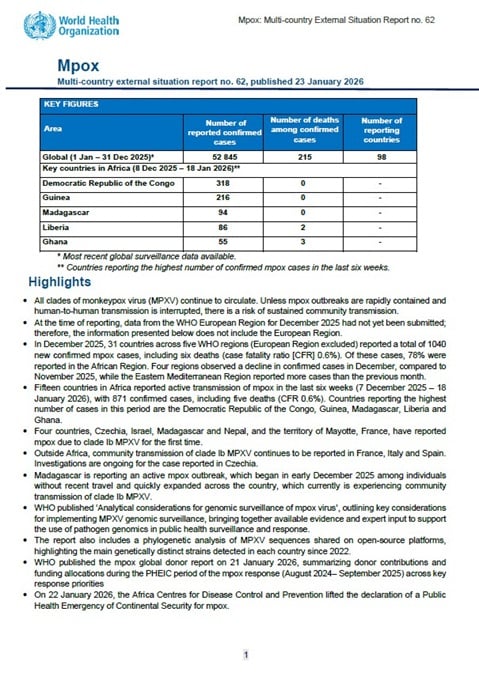
The World Health Organization released a new external situation report on mpox on January 23, 2026, providing an updated snapshot of the multi-country outbreak and the operational response as health agencies continue to manage surveillance and preparedness going into 2026.
The report compiles epidemiological information and summarizes trends across regions, with global data presented through the end of 2025 and additional updates for Africa into mid-January 2026. These periodic reports serve as a reference point for governments and public-health officials assessing whether transmission is stabilizing, shifting geographically, or re-emerging in new clusters.
WHO reporting on mpox typically focuses on confirmed case counts, the distribution of cases by geography and population, and the status of response tools such as laboratory testing, vaccination strategies, risk communication, and community outreach. The goal is to help countries match their response intensity to the level of risk and the capacity of local health systems.
Public-health officials have emphasized that sustained surveillance matters even when headlines fade. Changes in travel patterns, localized outbreaks, and gaps in access to diagnostics can quickly alter the apparent trajectory of a virus, especially when detection and reporting vary widely across countries.
The operational side of the response remains a recurring theme. Health agencies often must balance mpox work with competing pressures, including seasonal respiratory viruses, routine immunization catch-up, and resource constraints that can affect testing availability and outbreak investigation speed.
WHO’s situation reports are intended to inform decision-making, including when to intensify community engagement, update clinical guidance, expand targeted vaccination, or reinforce infection prevention and control practices in health care settings. They also provide a shared baseline for international coordination when outbreaks cross borders.
While the report does not replace local guidance, it signals that mpox remains a monitored global health issue into early 2026. Individuals concerned about exposure are generally advised to follow national health recommendations, seek timely medical advice if symptoms develop, and rely on credible public-health sources for updates.